
BUILT FOR THE
WORLD’S MOST SENSITIVE
COMMUNICATIONS
BUILT FOR THE
WORLD’S MOST SENSITIVE
COMMUNICATIONS
BUILT FOR THE
WORLD’S MOST SENSITIVE
COMMUNICATIONS
GLYPH – SECURITY WITHOUT SILOS
SOME CONVERSATIONS WERE NEVER MEANT FOR MAINSTREAM CHANNELS

National Security

Critical Decisions

Sensitive Transactions

Regulated Information

EXTRAORDINARY
RISK REQUIRES EXTRAORDINARY TOOLS
The world’s most consequential organizations still communicate across agencies, partners, and collaboration platforms designed for ordinary business. High-consequence conversations face critical gaps in security, access, interoperability, and compliance.
Encryption alone does not come close. A secure channel must protect the message, verify every participant spanning cross-organizational boundaries, and preserve control after the conversation ends.

Security & Oversight

Interoperability

AI-powered Threats

Quantum Readiness

Access Control

Auditability
BUILT BEFORE THE THREAT ARRIVED
High-Value Communications Become A Target
Google Threat Intelligence
Citizen Lab
One Account Can Expose A Wider Environment
& RECORD
The Channel Can Become The Liability
CFTC
EU Court
SOME SECURITY REQUIREMENTS SHOULDN’T BE DISCUSSED ON A PUBLIC FORM
Request A Secure BriefingMEET GLYPH – SECURITY WITHOUT SILOS
Glyph is designed so trust can be verified, controlled, and revoked. Glyph is not a commercial collaboration platform with inadequate or bolted-on security. We are not Slack. We are not Signal.
Glyph enables airtight encrypted communications that protect against everyone and everything – even itself. It does not read your messages. By design. It stands guard over more than your network or device, protecting the conversation itself. Glyph covers messages, calls, meetings, or file sharing.
- Quantum-safe Encryption
PQC-ready for emerging quantum computing threats - End-to-end Encryption
Communication remains private, secure - Zero-trust Device Control
Every device independently authenticated, governed
- Crypto Agility
Rapid migration to different algorithms if one is compromised - Interoperability
Rapidly onboard new users or partners with narrowly defined, time-gated access - Customer-controlled Governance
Command and control access, archiving, & security policy
INTEROPERABILITY WITH ONE STANDARD.
THE HIGHEST ONE.
Glyph provides flexible workspaces with critical access to mission partners.
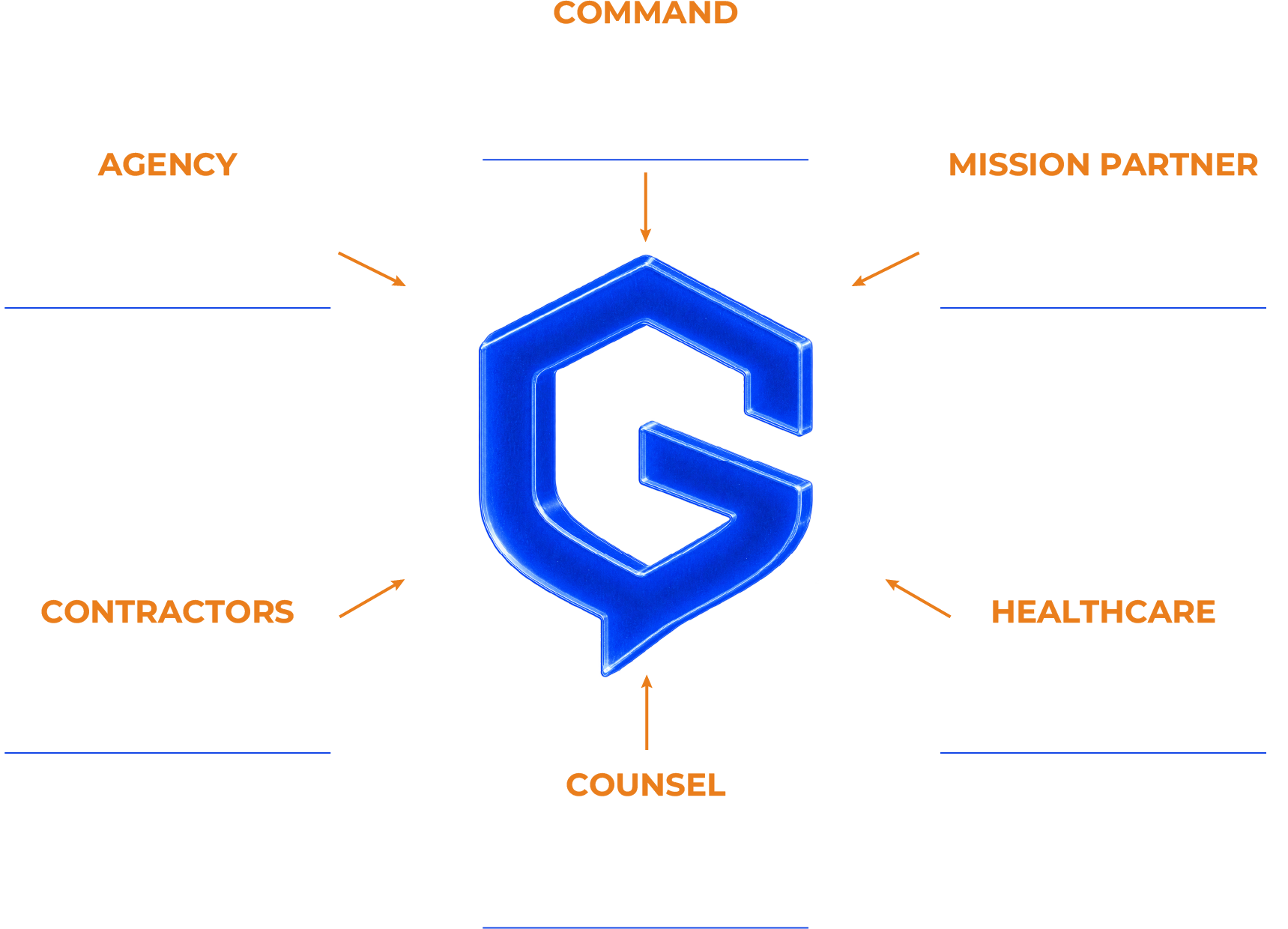
Every Organization In The Conversation
THE OUTCOME

Communications
Intelligence
Readiness
Security
Continuity
Regulation

Government
& Intelligence
- Interagency coordination
- OOB communications
- Contractor collaboration
- Principal, continuity comms

Defense
- Cross-service coordination
- Task force standup
- Allied, coalition operations
- Command investigations

Critical Infrastructure
- IT, OT incident command
- Sector, ISAC coordination
- Mutual aid, mass restoration
- Vendor, integrator access

Legal
- Client comms under privilege
- Internal investigation, intake
- Deal team transactions
- Cross-border matters

Financial
Services
- MNPI containment
- Recorded communication obligations
- Fraud, AML
- Incident response

Healthcare
- PHI messaging with archiving
- Mass broadcast notifications
- Group incident, safety reporting
- Outside clinician referrals, transfers

Executive
& Board
- Board deliberation
- M&A, divestitures
- Crisis, disclosure
- Executive succession
SECURE WHAT CAN’T BE COMPROMISED
Download The White PaperLED BY PEOPLE WHO KNOW WHAT’S AT STAKE